On-Site Biodiversity Initiatives



2025 - Enhancing Biodiversity through Tree Works at Westerfield
In alignment with ORIT’s commitment to promoting biodiversity across and around its renewable energy sites, a recent project shows how safety and sustainability can be achieved simultaneously. The project demonstrated a practical, cost-effective approach to enhancing biodiversity through the reuse of natural materials.
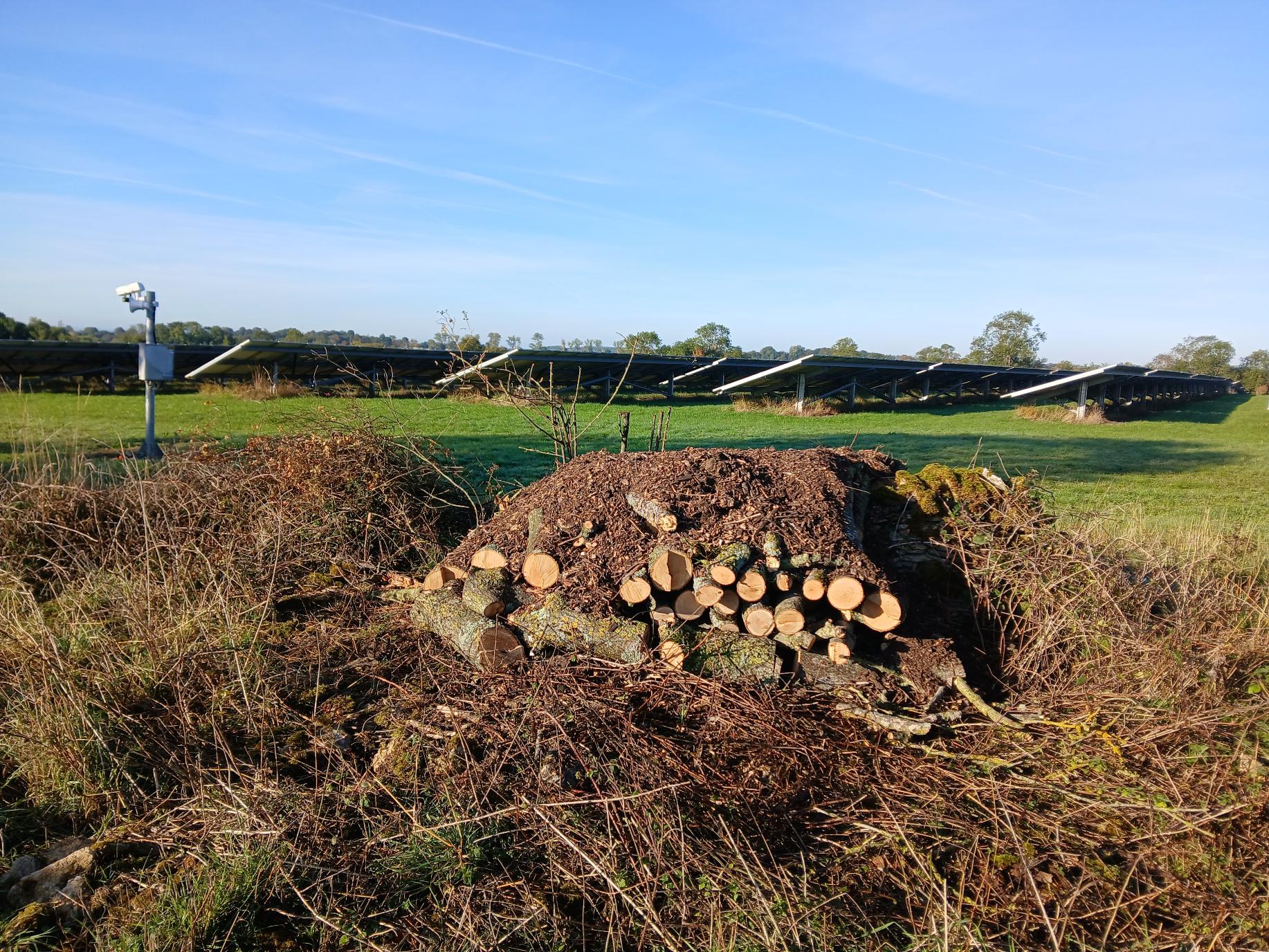
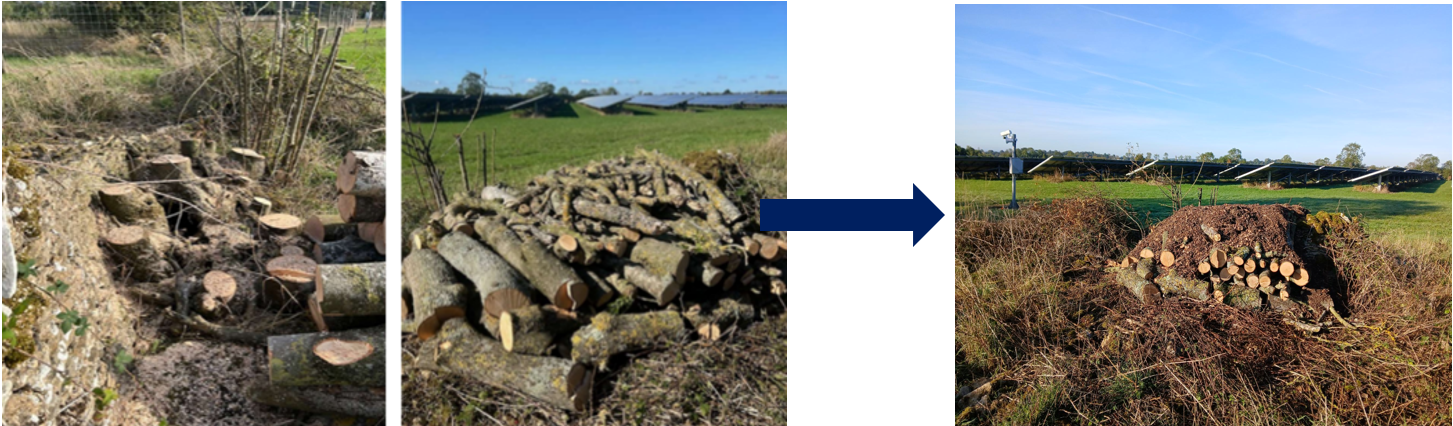
As part of ongoing site management at Westerfield, tree works were carried out to mitigate potential hazards, providing an opportunity to create five hibernacula(wildlife winter shelters) along the central line of the site. The primary objective was to enhance biodiversity through the sustainable reuse of timber and natural materials, while maintaining site safety. Timber from felled trees were repurposed to create the hibernacula's, providing safe habitats for amphibians, reptiles and invertebrates over the winter. The design was adapted to suit on-site conditions whilst avoiding excavation to minimise habitat disturbance.
The tree works were completed over a four-day period, with all activities carried out safely and without any reported incidents. All hazardous trees were either safely managed or removed, with all usable timber repurposed on-site. This approach avoided waste while providing tangible benefits for local biodiversity.
2022 - Greening the Portfolio with Grasslands
In the summer of 2022, ORIT’s contractors carried out annual field maintenance across its UK solar farm sites. This involved working with like-minded contractors and reflecting on how renewable energy and biodiversity can thrive side by side at the solar farms. The fields hosting our sites are now home to diverse meadow grasslands, and habitats that may never have existed without solar development.
a. Creating Diverse Grasslands
Many of these fields now host diverse meadow grassland which may not have emerged without the construction of the solar farm. It is not only the planting of wildflowers on site which should be noted as a biodiversity benefit – the wildflowers will grow diverse grass swards too.
b. Environmental and Climate Benefits
Low input grassland habitats have wide ranging benefits; critically it is estimated that grasslands hold a third of all terrestrial carbon, acting as large carbon stores crucial in the fight against climate change. As a home to solar panels, these fields are now classified as permanent pasture (i.e. areas of land which aren’t ploughed, reseeded or heavily fertilised). The soil won’t be turned over annually for agricultural operations, avoiding the release of large amounts of carbon into the atmosphere associated with these activities. Grasslands also play a large role in flood protection as the improved soil structure from low input management methods, and the root system of a diverse grass sward, allows large volumes of water to be held, helping prevent water run-off and soil erosion. This can be seen in solar farms where drainage issues have been alleviated post construction through the formation of a grass sward.
c. Supporting Wildlife and Food Security
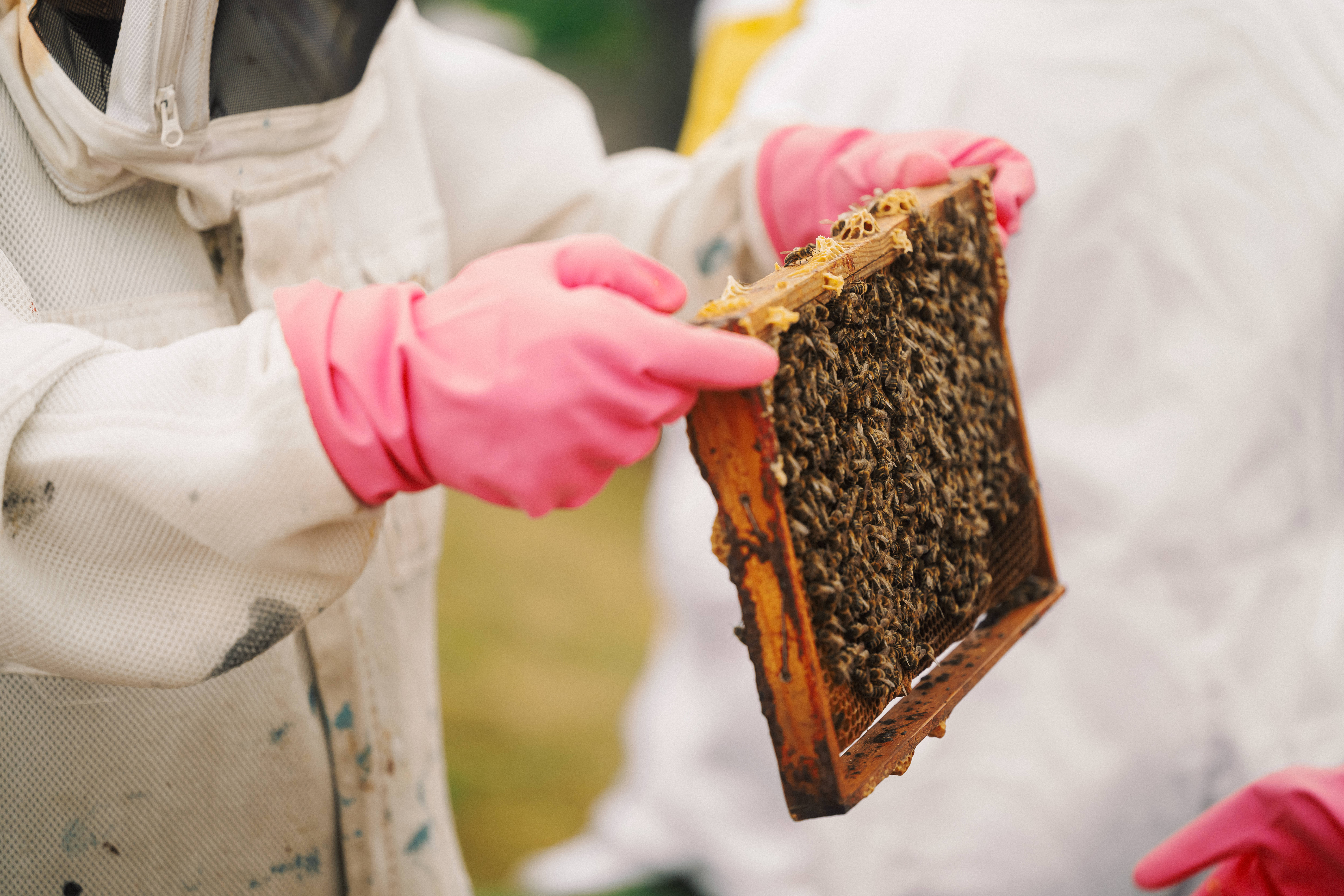
Additionally, post construction ecological studies of the sites have confirmed that these grasslands benefit local populations of mammals and invertebrates, which have thrived in the habitats created by the sites. The resulting increase in pollinators is also welcomed by the agricultural industry. Pollinators support an estimated one in every three mouthfuls of food we eat, meaning that both the management of species-rich grasslands and the cultivation from arable cropland is required to meet food security.
For the full case study please see ORIT's 2022 Interim Report
Impact Tracker
Enhancing Biodiversity through Tree Works at Westerfield
Who? Local Biodiversity
How Much? 5 hibernaculas
Impact Theme? Sustainable Momentum
Greening the Portfolio with Grasslands
Who? Local Biodiversity
How Much? 8/9 Solar Farms
Impact Theme? Sustainable Momentum